Putting feeling back into the new knee
is the most important part of the post-surgical journey
as measured by the Forgotten Joint Score
Surgeons
When the Implant Is Satisfactory
... But the Patient Is Not
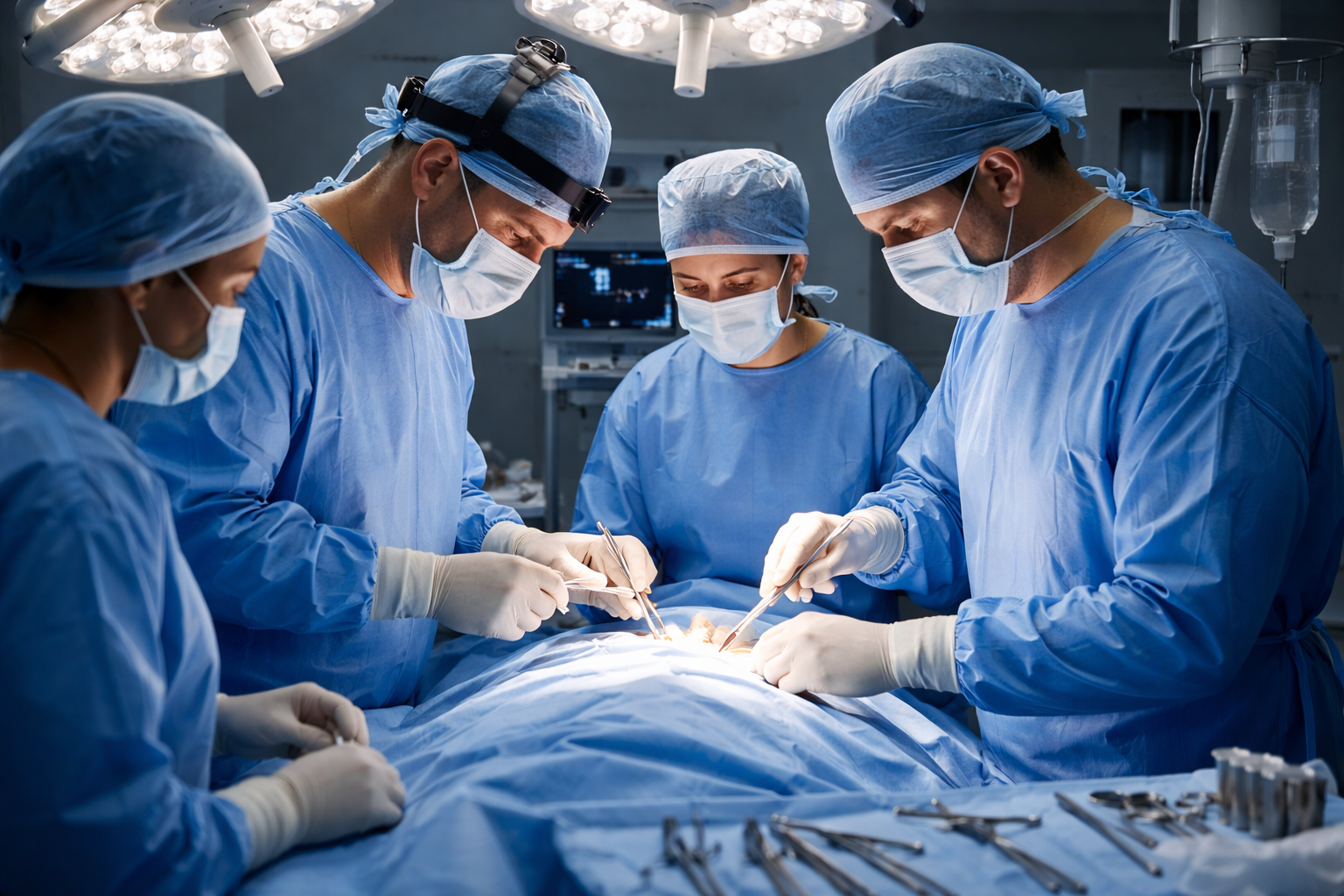
Surgeons take pride in their outcomes.
Modern arthroplasty delivers exceptional mechanical precision. Yet a subset of patients report ongoing symptoms despite technically successful surgery.
OrthoSense focuses on the sensorimotor component of recovery – an often under-evaluated contributor to patient experience following joint replacement.
The Paradox of Modern TKA Surgery
A significant proportion of arthroplasty patients remain dissatisfied despite appropriate alignment, stable fixation and reassuring imaging.
OrthoSense provides surgeons with an objective sensorimotor review and a structured pathway designed to address this gap in post-operative care.
The Problem Surgeons Know All Too Well
You have:
- Restored alignment
- Achieved stable fixation
- Balanced the knee
- Confirmed by satisfactory imaging
Yet the patient describes:
- Persistent pain or altered sensitivity
- Persistent stiffness or a tight banded sensation
- Muscle weakness despite compliance with rehab
- Reduced confidence in the joint
- Functional limitations inconsistent with surgical quality
- Dissatisfaction with the outcome
Revision is not indicated – yet reassurance generally doesn’t resolve the patient’s concerns. They can suffer ongoing functional limitations.
OrthoSense was developed to support surgeons in these situations.
Surgical Excellence Deserves to be Recognised
What OrthoSense Offers
OrthoSense is a complementary sensorimotor platform designed to evaluate and assist with retraining maladaptive neuromuscular patterns that may persist following arthroplasty.
The focus includes:
- Muscle inhibition (Arthrogenic Muscle Inhibition or AMI)
- Muscle co-contraction and movement guarding
- Altered joint perception
- Mid-flexion joint instability
- Persistent gait adaptations
The goal is to address functional presentation in cases where mechanical factors have been appropriately resolved.
Why This Matters to Arthroplasty Surgeons
Persistent post-operative symptoms are challenging for both patient and surgeon.
OrthoSense enables surgeons to:
- Introduce a structured, biologically plausible framework when mechanical causes are unlikely
- Differentiate mechanical findings from sensorimotor presentation
- Support informed patient discussions
- Reduce repeated investigations when imaging is reassuring
- Maintain confidence in technically successful surgery
- Reduce the emotional burden experienced from frustrated patients
OrthoSense is not a surgical alternative. It is a complementary extension of the recovery pathway; part of an-end-to-end protocol in patient care.
Clinical Focus Areas
OrthoSense common patients:
- Total Knee Arthroplasty patients with ongoing symptoms despite successful surgery
- Patients demonstrating persistent quadriceps inhibition patterns
- Individuals reporting stiffness, tightness, or altered joint perception
- Patients for whom conventional rehabilitation has plateaued
- “Well-aligned but dissatisfied” presentations
An Evidence-Informed, Collaborative Approach
OrthoSense has been developed through close collaboration between surgeons, our clinical team and university researchers. Our team of clinicians and engineers is focused on reducing persistent patient dissatisfaction - and preventing it from occurring in the first place.
The goals are to:
- Objectively assess sensorimotor function
- Structure a recovery plan to achieve patient satisfaction
- Enhance patient-reported outcome measures
- Move outcomes “to the right”: dissatisfied → satisfied and satisfied → delighted
- Grow partnerships to progress research and understanding
- Peer-reviewed publication of clinical outcomes
The aim is to contribute to a more complete recovery framework following arthroplasty.
How Surgeons Engage with OrthoSense
Engagement is straightforward and non-disruptive to existing care pathways.
Surgeons may:
- Refer selected post-arthroplasty patients
- Collaborate on clinical research and case studies
- Integrate OrthoSense into post-operative pathways
- Utilise structured reports to support patient discussions
The Question Has Evolved
Instead of asking:
“Why is this patient still unhappy?”
We propose asking:
“Have we evaluated the sensorimotor component of recovery?”
Are you ready to Engage OrthoSense?
- Explore the clinical framework
- Discuss a complex case
- Participate in collaborative research
- Refer a patient (local availability at present)
Patients
Supporting Your Recovery After Knee Replacement
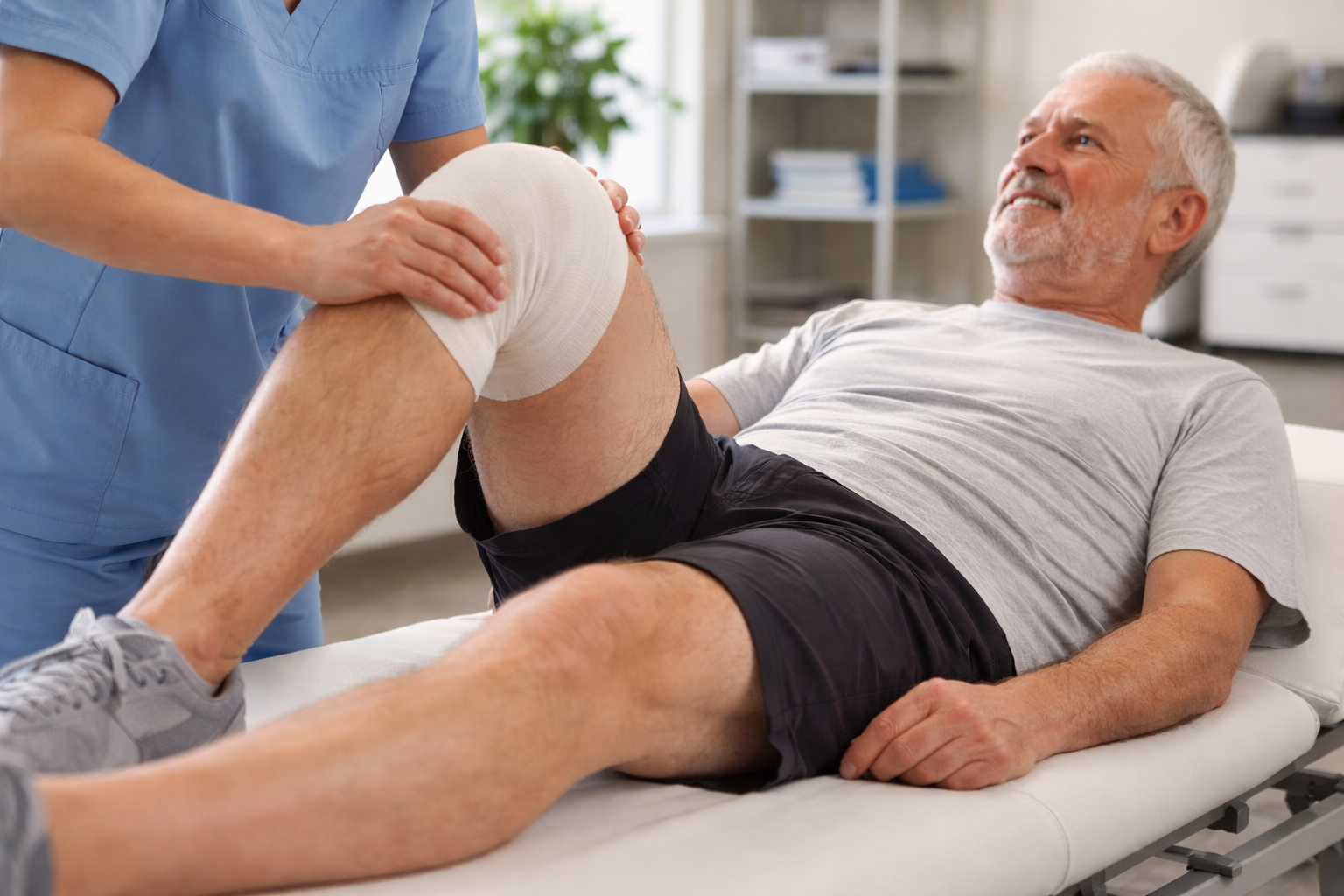
Most knee replacements heal well and allow people to return to the activities they value.
Sometimes, however, recovery can feel slower or more difficult than expected – even when your surgeon is happy with the surgery and your scans look reassuring.
You might notice:
- Ongoing stiffness
- A feeling of tightness around the knee
- Weakness or lack of confidence
- Restricted knee bend
- Difficulty trusting the joint during walking or on stairs
- Progress that feels “stuck” despite doing your exercises
This does not automatically mean something is wrong with your implant. There could be a simple solution.
What Is OrthoSense?
OrthoSense is a structured movement and neuromuscular retraining program designed to support people after knee replacement.
After surgery, your body and nervous system need time to “re-learn” how to move efficiently and confidently. Sometimes the muscles and movement patterns around the knee become protective or hesitant. OrthoSense focuses on helping restore smoother, more coordinated movement with the goal of fulfilling your potential.
What We Do
OrthoSense involves:
- Assessing how your knee and surrounding muscles are working
- Identifying movement patterns that may be limiting progress
- Guiding you through targeted exercises designed to improve coordination and confidence
- Tracking your progress over time
The program works alongside your surgeon and rehabilitation team. It does not replace your surgery or your standard rehabilitation – it complements them.
Our Goal
Our goal is simple:
To help you feel more confident, move more comfortably, and get the most out of your knee replacement.
If you feel your recovery has plateaued, OrthoSense may provide an additional pathway forward.
Investors – Expressions of Interest
Partnering to Transform Post-Operative Recovery
Register your interest to receive information regarding potential investment, care pathway collaboration, or strategic partnership opportunities with OrthoSense.

Research
The State of Sensorimotor Research
(Total Hip & Knee Arthroplasty)
- Mid-Flexion Instability After Total Knee Arthroplasty
-
No evidence of mid flexion instability after robotic assisted total knee arthroplasty (2024). Robotic-assisted measurement of mid-flexion stability demonstrating intraoperative sensor use.
-
Mid flexion instability in total knee arthroplasty: systematic review (2021) Comprehensive evidence synthesis on MFI and contributing factors.
-
Risk factors for mid flexion instability after TKA: systematic review (2020) Risk factors and biomechanical considerations.
-
Mid Flexion Instability After Total Knee Arthroplasty: Diagnosis & Outcomes (2023) Diagnostic criteria, implant design, and outcomes overview.
-
- Sensorimotor Training and Functional Recovery After Arthroplasty
-
Sensorimotor training prior to TKA: systematic review & meta analysis (2021). Prehabilitation evidence for neuromuscular training.
-
Effects of sensorimotor training volume on lower limb arthroplasty recovery (2015). Quantifying sensorimotor outcomes in early recovery.
-
What is the effect of sensorimotor training on balance & function post TKR (2015). Systematic appraisal of proprioceptive intervention outcomes.
-
- Proprioception, Motor Control & Functional Movement Post-Arthroplasty
-
Evaluation of sit to stand biomechanics after modern TKA (2024). Integrated kinematic & EMG analysis.
-
Effects of motor imagery on strength & function in TKA patients (2021) . Motor imagery effects on muscle recovery patterns.
-
- Arthrogenic Muscle Inhibition (AMI) & Neuromuscular Patterns
-
Arthrogenic muscle inhibition: a prevalent issue in knee arthroplasty (2025). Quantifying quadriceps inhibition and its clinical relevance.
-
- Hip & Knee Kinetic Chain Interactions
-
Hip abductor muscle strength in patients after TKA: systematic review (2025). Gait kinetics and proximal motor influence on knee function.
-
Contact OrthoSense
Contact Us
Speak With Our Experts About Your Surgical Recovery Pathway Needs
OrthoSense partners with surgeons, physiotherapists, health insurers, hospitals and healthcare organisations to optimise post-operative recovery pathways.
If you are exploring improved outcomes, reduced recovery variability, or scalable recovery solutions, we invite you to start a confidential conversation.